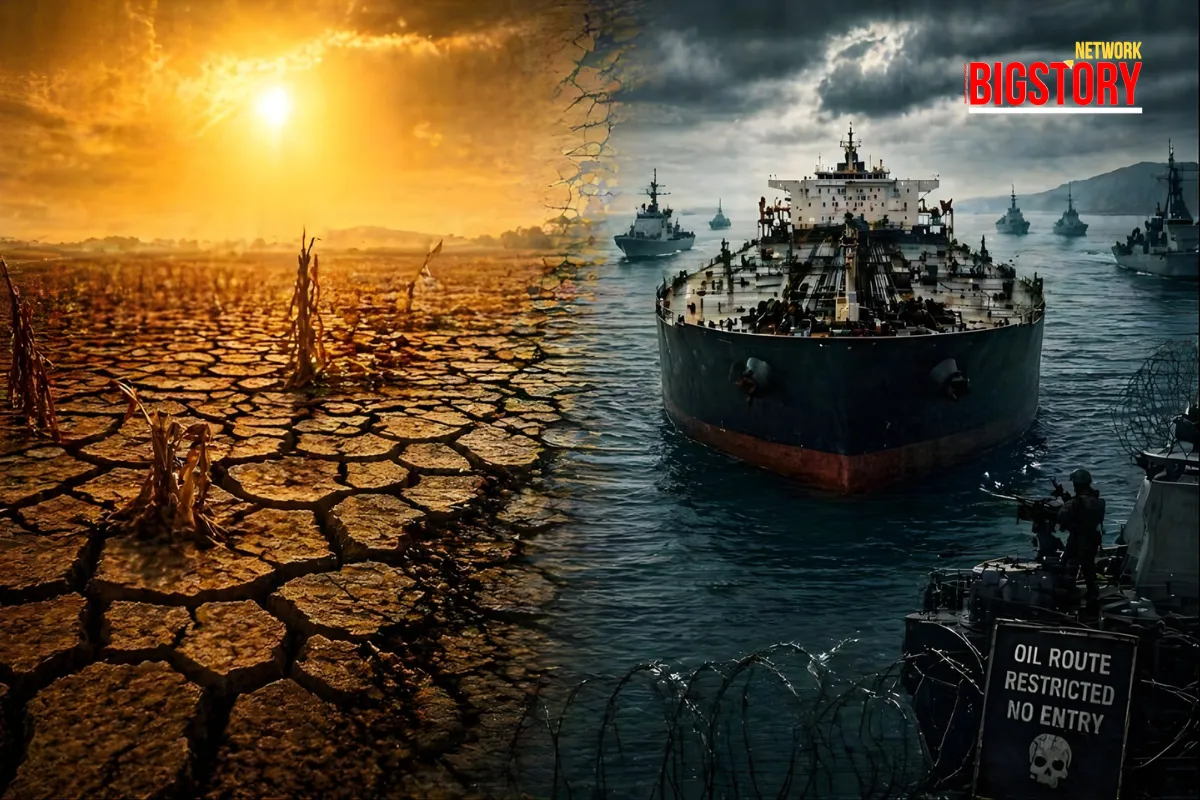
Global climate monitors are warning of a massive Pacific anomaly that will severely stunt India's 2026 monsoon. But the true danger lies in its collision with the ongoing Middle East shipping blockade, creating an invisible, systemic trap for Indian agriculture.
 Brajesh Mishra
Global climate monitors and the World Meteorological Organization (WMO) have just confirmed that a rapidly accelerating climate anomaly is on a direct collision course with India's already fragile geopolitical reality.
As of Friday, April 24, 2026, international meteorological models show an alarmingly high probability of a "Super El Niño" forming by June. For India, this anomaly threatens to derail the southwest monsoon, triggering a systemic, multi-sector economic crisis that stretches far beyond the farm sector.
The US National Oceanic and Atmospheric Administration (NOAA) and the WMO have signaled a rapid transition from neutral conditions to a high-probability El Niño event developing between May and July. Current models indicate that ocean temperature anomalies could push past 2°C, categorizing it as a historically severe "Super" or "Godzilla" El Niño.
Historically, the data is grim: 9 out of 14 El Niño years have resulted in deficient Indian monsoons. Domestic forecasters, including the IMD and private agency Skymet, have already projected the 2026 southwest monsoon to be "below normal"—pegged dangerously low at around 92% to 94% of the Long Period Average (LPA).
The immediate ground realities are already highly visible. Northern and central India are currently reeling under massive, record-breaking heatwaves, while the Himalayan states are reporting a highly unusual "snow drought," severely threatening the summer reservoir ecosystems that feed northern rivers.
A sub-95% monsoon does not just mean a hot, uncomfortable summer; it triggers a cascade of economic failures across India's $4 trillion economy.
Crucial rainfed Kharif crops—such as rice, maize, pulses, and oilseeds—are at extreme risk of moisture stress and sharply shortened sowing windows. Key agricultural belts in North Karnataka, Maharashtra, and parts of the Hindi heartland are already preparing contingency plans for drought-like conditions.
A direct hit to crop yields instantly decimates rural purchasing power. Market analysts are already warning of a severe, impending contraction in rural demand, signaling a bleak Q2 and Q3 for tractor sales, two-wheeler manufacturers, and fast-moving consumer goods (FMCG). Furthermore, reduced agricultural output will almost certainly trigger a sudden spike in food inflation, forcing the Reserve Bank of India (RBI) to maintain a hawkish stance and deliberately slow down broader economic growth to control prices.
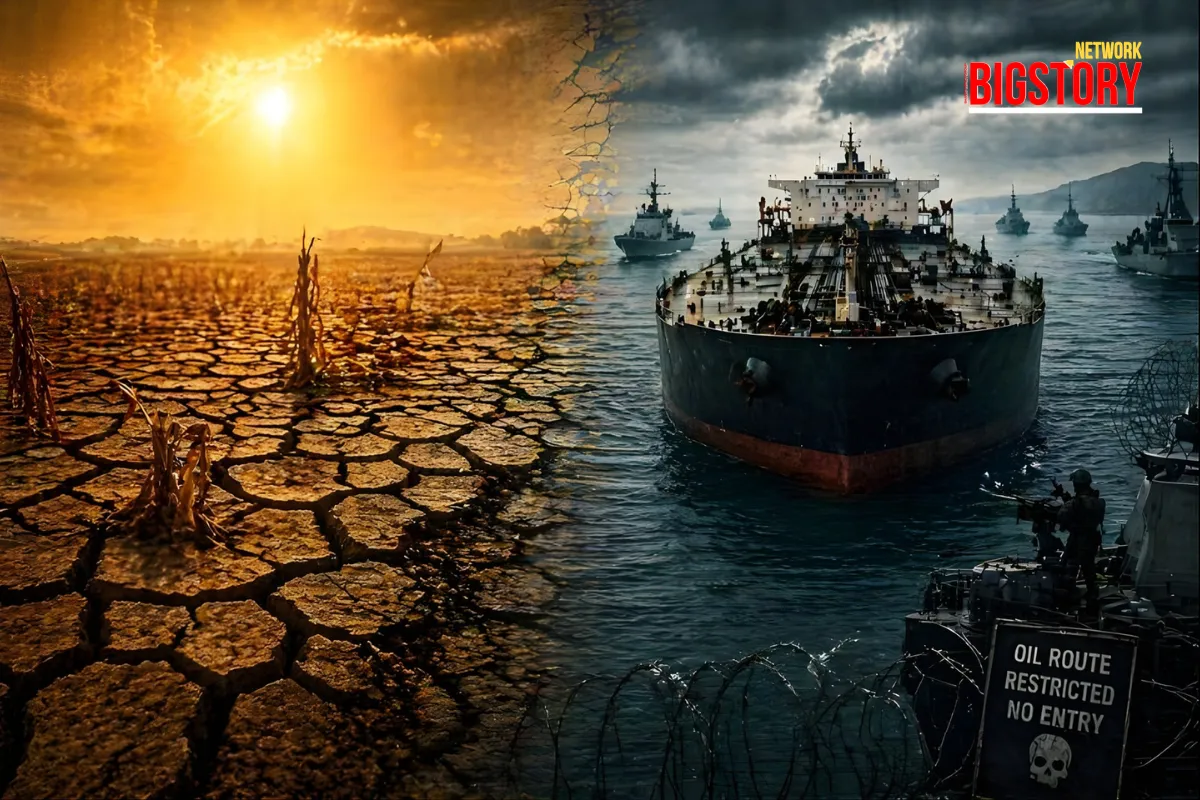
While agricultural economists focus on rainfall percentages, the true "Missed Angle" here is the invisible, systemic trap closing in on Indian agriculture: the lethal convergence of Pacific heat and the Hormuz Blockade.
When the monsoon fails, Indian farmers are forced to rely heavily on artificial, groundwater irrigation (which runs on diesel pumps) and aggressive chemical intervention to save their stunted crops. However, this Super El Niño is arriving at the exact moment Iran has abruptly shut down the Strait of Hormuz due to the ongoing US naval blockade.
Shipping lanes vital for India's LNG, crude oil, and raw fertilizer materials (including ammonia, phosphoric acid, and sulphur) are currently paralyzed. Indian farmers are about to be hit with exponentially higher fuel and fertilizer costs at the exact micro-moment their yields are crashing due to drought.
This isn't just a weather crisis; it is a highly synchronized climate-supply chain shock. It threatens to trigger a massive, inescapable rural debt crisis that the central government's subsidy budget cannot easily absorb. This geopolitical vulnerability is precisely what drove the recent, frantic diplomatic reset between India and South Korea to secure alternative maritime infrastructure.
News & Wire Coverage:
 Exclusive Content






Sign up for the Daily newsletter to get your biggest stories, handpicked for you each day.

 Trending Now! in last 24hrs